AHA← Back to site
Open the live demo →
Final Product Pitch01 / 22
AHA

See who’s actually
in the room.

An AI engagement copilot for large live online courses (100+ students). Opt-in and privacy-first, AHA surfaces quiet disengagement in real time, so instructors can act while it still matters.

Open the live demo
Final Group Project · New Product Development
Agung · Wesley · Kashvi · Yangchen · Sheila · Karlee
Group 1 · Technology Product Management · Columbia University · Summer 2026
aha-moment-nine.vercel.app/instructorLIVE
Intro to Cog Sci · 002Class78%
JK
● Engaged
PN
● Drifting
ML
● Engaged
AP
● Disengaged
JR
● Cam off
AS
● Engaged
COPILOT
Aisha is drifting, send a private ping?
Cold open02 / 22

He’s teaching, but is anyone there?

A room of 100+ students, all equally “present.” Torres can’t tell who’s still with him.

User persona03 / 22

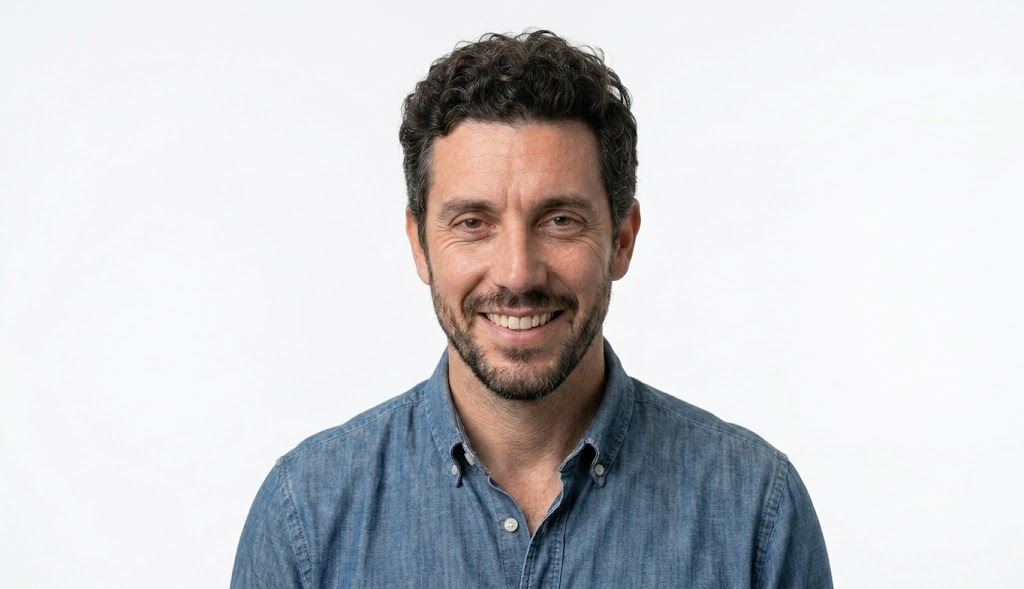
Meet the instructor living that gap.

Michael Torres
Michael Torres
Adjunct lecturer · large intro course · 100+ students, 1 instructor
“In a physical classroom, I can read the room without thinking. Online, everyone looks equally present, whether they're with me or not.”
Synthesized from 6 user interviews.
What his day feels like
He needs to know, in real time, who's confused or checked out.
By the time a quiz shows him who was lost, the session is already over.
Every time he tries to re-engage the room, it's a guess. He has no way of knowing if it worked.
Cold-calling is his only live signal, but it breaks his teaching flow.
Problem statement04 / 22

He’s not imagining it.
Attendance is visible. Learning isn’t.

In live online lectures of 100+ students, instructors have no reliable way to know when students feel unseen, confused, passive, or disengaged.

Vision statement05 / 22
AHA

So what would it take to close that gap?

Restore the ability to read a room, the moment class goes online.

Value proposition06 / 22
Here’s how we make that happen

A co-pilot for the classroom.

Michael Torres
+
AHA
1Live Engagement Dashboard

A real-time picture of the class in three states, so the instructor knows where to direct attention right now.

“He needs to know, in real time”
“A quiz tells him too late, the session's already over.”
2AI Instructor Copilot

Suggests the next best action when a group drifts.

“Cold-calling is his only live signal”
“Every time he tries to re-engage the room, it's a guess.”
3Fits Existing Tools

Zoom API and Brightspace integration.

4Trust by Design

On-device processing, disclosure at session start, and the Two-Witness Rule against false flags.

Solution statement07 / 22

What is AHA! And what it does?

AHA is an attention-intelligence layer on top of the live class.

FacialBehavioralALERTboth agree
One signal alone never fires an alert.
01
Signals

Facial attention + behavioral activity, computed on-device

›
02
Two-Witness Check

Alert candidate only when two independent signals agree

›
03
State Update

Engaged / Drifting / Disengaged vs. the student's own baseline

›
04
Dashboard + Copilot

Instructor sees the room; Copilot suggests next best action

›
05
Instructor Acts

Poll, break, or check-in; dismissal reasons retrain thresholds

The feedback loop is the product: every dismissed alert teaches the system, so precision improves with use instead of decaying.
Defined MVP feature set08 / 22

The smallest product that proves the core claim.

MVP claim to prove: an instructor of a 100+ student class can be told, precisely and in real time, who is disengaging, and act on it.
Product demo reel · ~60s
Scan for the live AHA demo
Scan me
Try it live
Two-Witness detection engine

On-device signal fusion; alert only on two agreeing independent signals.

Three-state live dashboard

Engaged / Drifting / Disengaged class view against per-student baselines.

Cameras-off behavioral fallback

Chat, poll, and quiz signals for the many students who keep video off.

Transparent student controls

Disclosure at session start, a visible in-session indicator, and session-level data deletion.

Zoom integration

Runs inside the platform instructors already use; no new tool to adopt.

Dismissal-reason capture

Every dismissed alert records why, feeding threshold recalibration.

Trust & privacy · Live Student Pulse09 / 22

Students can privately raise a quiet hand.

Alongside AHA’s AI states, Live Student Pulse lets students say how it’s going. Only the instructor sees who chose what.
Live Student Pulse
I understand71%
I'm confused14%
Please slow down9%
I need help6%
Live counts per response, shown next to the AI states (Engaged / Drifting / Disengaged).
Scan to try Live Student Pulse
Scan me
Try it on your phone, raise your own quiet hand.
AHA recommends an action by how many are struggling
< 10%Discreetly nudge those students toward office hours.
10–20%Suggest a brief check-in or a quick poll.
20–30%Pause and re-explain the concept.
30%+Stop the lesson to review the material.
Initial guidelines, refined during the pilot. Instructors keep full discretion.
Instructors see who chose each response, not just the totals.
Pulse never fires an alert on its own, it's a separate layer alongside the Two-Witness engine.
If Two-Witness is how AHA watches, Pulse is how it listens.
Adapting under pressure10 / 22

Three twists, three decisions that shaped the product.

1Module 4
Negative user feedback

Our learner-focused course-completion tool failed Cagan's value risk, users showed too little interest. We shifted to the instructor side, prioritizing detection of disengagement over content fixes. This redefined our problem statement, primary persona, and the entire MVP.

2Module 6
Mid-project team reshuffle

The team changed after we picked the topic and ran early interviews, leaving new members without discovery context. We split tasks by strength and documented every decision to transfer context fast, which directly shaped our GTM channel strategy and the buyer-side thinking in this deck.

3Module 10
Stakeholder's late feature request

A senior stakeholder proposed Live Student Pulse midway through, letting students privately report how they feel in class. We adopted it as a third independent validation signal, not an alert trigger, with action levels that escalate by how many are struggling. It's tested in Months 3–6 as ground truth for Flag Precision Rate.

User persona11 / 22

Meet Torres, again! What does his class look like now?

Michael Torres
Torres, again
Same class, same 100+ students, now with AHA running
“Online teaching still isn't the same as being in a physical classroom. But now, I can read whether they're with me or not.”
Same instructor, same room, now legible.
What changes with AHA
Now he knows, in real time, who's confused or checked out.
The session isn't over before he finds out who was lost.
He's no longer guessing, he knows if it worked.
Cold-calling isn't his only signal anymore, and his flow stays intact.
6-month product roadmap12 / 22

Not a build schedule. A proof schedule.

◆ Gate 1 · FP < 15%◆ Gate 2 · labeled data◆ Gate 3 · privacy + adoption
MVPMonths 1–2
  • ›Two-Witness engine + Zoom API
  • ›Per-student baseline calibration
  • ›Internal false-positive rate below 15% on test data
PilotMonths 3–6 (full semester)
  • ›3 universities, closed beta
  • ›70%+ of pilot instructors return in consecutive weeks
  • ›Live Student Pulse piloted; validates Pulse-alert agreement
ScaleMonths 7–8+
  • ›Expand toward 10 universities on references + word of mouth
  • ›First institutional contract (procurement takes months)
  • ›2 of 3 original pilots signal renewal or expansion intent
GATE 1: hit false positives below 15% overall / below 25% per subgroup, or pivot to poll & quiz signals only.
GATE 2: enough reliably-labeled sessions, or delay analytics.
GATE 3: privacy approval + adoption threshold before scaling.
Parallel track from Month 1: privacy review, DPA draft, accessibility audit, security questionnaire. Prioritized with MoSCoW, RICE, and Kano.
See the full roadmap →
Competitor & differentiator13 / 22

We’re not the only ones watching this space.

Competitor
Where they stop
What AHA does next
Engageli
Sees engagement only during an activity.
Flags class-wide silence, even with zero activity.
Kortext Stream
Calculates engagement on the LMS, after the fact.
Recommends in the moment, while class is happening.
Adaptemy
Adjusts content from quiz answers, no live signal.
One specific, one-click action for the instructor.
Zoom / Mentimeter
Standalone self-report, not checked against reality.
Compares self-report against real-time behavior.
Every competitor needs an action to read engagement. We added a signal, so silence itself can trigger one.
Key success metrics14 / 22

But scaling only matters if it’s working.

The analytics view every pilot gets: one North Star, four KPIs, live guardrails.

aha-moment-nine.vercel.app/metricsLIVE
Engagement Analytics
Intro to Cognitive Science · Section 002 · 8-week pilot
This week4 wks8 wks
North Star
Weekly High Engagement Minutes / Class Session
0.0min▲ 45% · 8 wks
AHA-onAHA-off baseline
303540W1W2W3W4W5W6W7W8
Alert latency▼ 22% faster
0s
Onset → instructor alert
Alert-to-action▼ 15% faster
0s
Alert shown → response
Pulse-alert agreement▲ +9 pts
0%
Confirmed by student Pulse
Recovered minutes▲ vs. no action
+0.0
Engaged min regained / intervention
Scale gateFalse positives 11.4% · target < 15%Student consent 78% · target > 70%Renewal intent 2 / 3 pilots · target ≥ 2Open full metrics →
Go-to-market strategy15 / 22

Bottom-up trust, top-down contracts.

Bottom-up

Free instructor pilots build advocates.

Platform

The Zoom API puts AHA where instructors already are.

Top-down

Higher-ed conferences (e.g. EDUCAUSE) reach legal, IT & privacy stakeholders.

Market
TAM
$35B → $74.9B
SAM
$3–4B
SOM
100–150 unis
The motion: free semester pilots at 3 universities (Month 3–6) → 10 paid institutional contracts (Month 7+).
~$1M
first contract ARR · one Tier-3 university · 4,500 instructors · $220/instr/yr
3-year ARR opportunity $10–15M · go-to-market budget (first 6 months) $190–280K.
See the full GTM plan →
Thank you16 / 22
AHA

Thank you. Questions welcome.

Give instructors back the room. Try it live at aha-moment-nine.vercel.app.

Try it live →
Agung · Wesley · Kashvi · Yangchen · Sheila · Karlee
Group 1 · Technology Product Management · Columbia University · Summer 2026
Appendix · Beneficiaries17 / 22

Four learner types, from our interviews.

The Obligated CompleterCore

Finishes for the deadline or certificate. Drifts silently, never raises a hand. AHA's core beneficiary.

The Structure-Seeker

Needs clear pathways and pacing. Drifts when the class loses its thread; recovers fast with a check-in.

The Self-Driven Builder

Intrinsically motivated. Rarely flagged; benefits from a class where others stay engaged too.

The Playful Explorer

Engages through interaction. The Copilot's polls and activities are made for this learner.

Data from our 6 user interviews.
Appendix · Stakeholders18 / 22

Torres isn’t the only one who has to say yes.

UserInstructors

Uses the dashboard and copilot in every live session. Michael Torres.

BeneficiaryStudents

Affected by the monitoring itself, including students with disabilities, neurodivergent students, and different lighting, camera quality, or expression norms.

BuyerUniversity department

Evaluates ROI and course-improvement outcomes. Signs the institutional contract.

ApproverLegal, privacy, IT, accessibility

Must independently sign off, consent, data governance, security review, accessibility audit, before procurement proceeds.

Each evaluates value differently, so the stakeholder-approval workstream runs in parallel with product development from Month 1, not after the pilot.
Appendix · GTM budget & ARR19 / 22

Institutional pricing, seat-based.

Up to 100 seats$300/seat/yr
101–500 seats$250/seat/yr
500+ seatsCustom
~$1M
first contract ARR · one Tier-3 university, 4,500 instructors, $220/instructor/year
$10–15M
3-year ARR opportunity
Go-to-market budget · first 6 months$190–280K
Pilot onboarding & support$60–90K
Sales & business development$80–120K
Higher-ed marketing (EDUCAUSE)$20–30K
Legal & compliance (IRB, FERPA)$30–40K
Instructor tools stay free to drive adoption; the paid tier is the institutional dashboard, billed per seat at the department level.
Appendix · GTM roadmap20 / 22

Build → pilot → prove → scale.

Phase
Timeline
Owner
Key activities & gate
Build
Months 1–2
Product & Engineering
MVP development; Zoom API integration (top RICE feature); on-device processing and Two-Witness Rule built; consent, IRB, and IT security workstream starts in parallel.
Pilot Prep
Month 3
Customer Success & BD / Sales
Secure 3 Tier-3 pilot universities; sign consent and IRB approvals; onboard instructors; baseline calibration set up per student.
Semester Pilot
Months 3–6
Customer Success
Full semester-long pilot; track consent rate (>70% gate), false-positive caps (<15% overall, <25% subgroup), NPS, and repeat use; correlate engagement with quiz and comprehension outcomes.
Go / No-Go
End of Month 6
Product
Evaluate pilot metrics against gates before scaling curriculum analytics; capture references and case studies from pilot partners.
Scale
Months 7–12
BD / Sales
Expand to 10 universities; move from free instructor tools to paid institutional contracts; EDUCAUSE to reach legal, IT stakeholders.
See the full GTM plan →aha-moment-nine.vercel.app · Thank you · Questions welcome
Appendix · Tier-3 universities21 / 22

Selected Tier-3 universities, the basis for ~4,500 instructors.

#
College
Faculty size
1
University of Michigan
8,170
2
University of Florida
6,195
3
UT Austin
4,693
4
UNC at Chapel Hill
4,538
5
Boston University
4,309
6
University of Virginia
3,200
7
Georgia Tech
1,544
Average · Median
4,664 · 4,538
The estimated faculty size of ~4,500 is based on the median and average faculty counts across these Tier-3 universities, and used to estimate instructors in the first contract.
References22 / 22

References.

01AMW World Group. (2026). Trade show cost: Exhibition & booth pricing guide 2026.
02Buolamwini, J., & Gebru, T. (2018). Gender shades: Intersectional accuracy disparities in commercial gender classification. Proceedings of Machine Learning Research, 81, 1–15.
03Cagan, M. (2018). Inspired: How to create tech products customers love (2nd ed.). Wiley.
04Cosmic College Consulting. (2026, May 2). Tiers of U.S. colleges.
05Fortune Business Insights. (2026). EdTech market share, size, trends, forecast, 2034.
06GrowthSpree. (2026). B2B SaaS and B2B marketing budget benchmarks 2026.
07Kano, N., Seraku, N., Takahashi, F., & Tsuji, S. (1984). Attractive quality and must-be quality. Journal of the Japanese Society for Quality Control, 14(2), 147–156.
08Mentimeter. (2026). Live polling.
09Rutkowski, I. P. (2022). How to measure the success or failure rate of a new product strategy in competitive markets. Marketing of Scientific and Research Organisations, 45(3), 27–44.
10Schneider, J., & Hall, J. (2011, April). Why most product launches fail. Harvard Business Review.
11StealthAgents. (2026). Cost of hiring a customer onboarding specialist in 2026.
12The Business Research Company. (2026). Education and learning analytics global market report.
13U.S. Department of Health and Human Services, Office of Population Affairs. (n.d.). Institutional review board tip sheet.
14vCISO Lite. (2026). FERPA compliance checklist for EdTech startups.
15Zoom. (n.d.). Zoom Workplace pricing.
16Zoom Video Communications. (2026). Nonverbal feedback features.
AI disclosure: portions of research synthesis, drafting, and prototype development were assisted by AI tools; all analysis and decisions are the team’s own.